
International Air Travel
The best thing you can do when traveling outside of the United States with your children is check the car seat laws of the country or countries you will be visiting. This will help you prepare and avoid surprises.
Before beginning your journey, keep in mind the following things:
- First, check with your airline(s) to find out their rules about car seat transporting fees and use in the plane. International airlines have different rules than U.S. airlines.
- Although Buckle Up for Life highly recommends against renting car seats in the U.S., when it comes to overseas travel, you might be better off renting a car seat at your final destination to make sure you comply with the local laws and recommendations. Read the manufacturer’s instructions before installing your rental car seat.
- Keep in mind that the seat belt may not have a locking mechanism to allow you to secure the car seat properly. If you are traveling with your own car seat and it has lock-offs, you are in luck – but if it does not, you will need a locking clip to secure your car seat. If your car seat doesn’t have one attached to back of it, you can call the manufacturer and they will send one to you. The key is to plan ahead.
- When traveling to Latin American and Asia, keep in mind that even though many countries have car seat laws, they are not always enforced. For this reason, renting a car seat at your destination may not be possible, so you may want to bring your child’s car seat with you.
- Additionally, many cars in Latin America and Asia do not have seat belts with a pre-locking mechanism that allow you to secure your car seat in place. Unless your car seat has lock-offs, you will need to bring a locking clip with you.
Domestic Air Travel
Using a car seat on an airplane helps ensure that children are held securely and safely in the airplane seat. Lap-only seat belts, like the ones found on airplanes, are not designed to safely restrain small children. A car seat will offer the same protection to children that seat belts offer to adults.
Good to know before you go:
It’s best for kids to ride on an airplane in the same type of seat they use in a car whenever possible—but not all car seats are approved for air travel. The Federal Aviation Administration (FAA) says car seats that are 16 inches wide or less usually fit on airplane seats. Still, just because a car seat fits doesn’t mean it’s allowed to be used on the plane.
-
To use a car seat onboard, look for a label that clearly says it’s approved for aircraft use. If you can’t find one, check the owner’s manual or call the manufacturer to be sure. Also keep in mind that booster seats aren’t allowed during takeoff or landing. Since airline rules can vary, it’s always a good idea to check with your airline ahead of time about any booster seat restrictions.
-
Most airlines do allow car seats, but double‑checking before your trip can save stress at the airport. Your airline may also have helpful tips on bringing your car seat through the terminal and installing it on the plane. Many airlines don’t count a car seat as one of your checked or carry‑on items, but it’s best to confirm their policy before you fly.
-
If you’d rather not bring a car seat onto the plane, there is another option. The FAA has approved a special child safety harness for children who weigh between 22 and 44 pounds. Just keep in mind that this harness is for airplane use only—it can’t be used in a car.
Cold Weather Tips
- Before strapping in your child, always remove excess clothing like puffy coats. They can prevent the straps from tightening enough to properly restrain your child in a car crash.
- It’s much safer to strap your child in first and then either cover them with a blanket or lay their coat on top of them like a blanket.
- You can also buy a special car seat poncho for your child’s infant seat that’ll provide warmth without getting in between the straps and your child.
Hot Weather Tips – Heatstroke Prevention
- Protect your child against hot vinyl padding, metal and plastic on the car seat.
- Feel the seat and buckles before putting your child in it. In hot weather, lay a towel or cloth over the seat when not in use.
- Never leave infants or children in a parked vehicle, even if the windows are partially open.
- Even cool temperatures in the 60s can cause the temperature to rise well above 110° Fahrenheit inside your car. The inside temperature can rise almost 20 degrees within the first 10 minutes
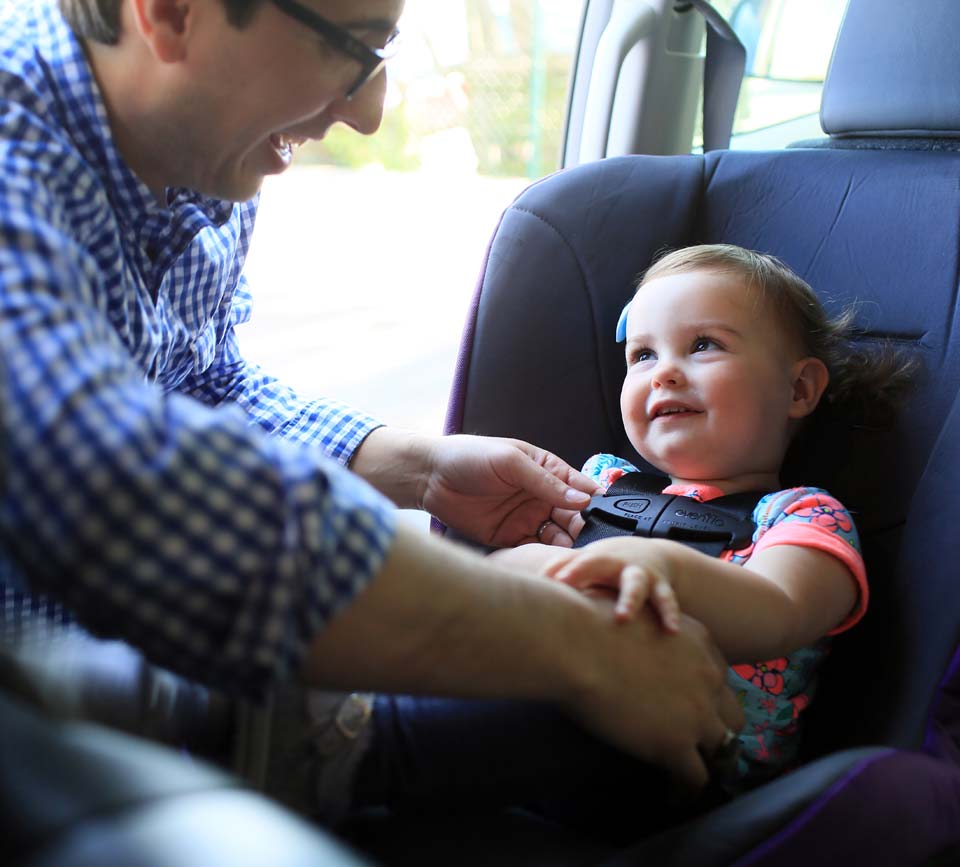
Make sure it stays tight
After miles on the road, is their car seat still in there correctly? Find out with these tips.